Tuesday, 18 June 2013

Eat right, win the Cancer Fight


 It has recently been reported by Macmillan Cancer support that a frightening 47% of the UK population will develop some form of Cancer.  That's almost HALF the people you know, possibly yourself included.

This is just 7 years away, and while researchers say system of prevention is on the way, it may take another 15 years at least to find it.
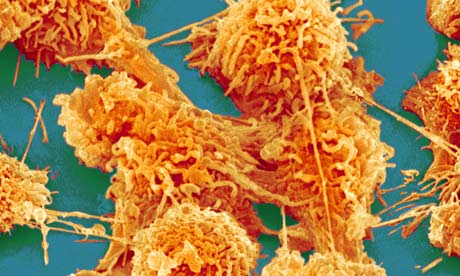
So till then, what can you do to reduce your risk of being in that 47%.

Some of the first pointers that you will have heard, reduce or avoid smoking, reduce alcohol consumption and live an active and healthy lifestyle.

What can you do with your diet to help in Cancer prevention?

Firstly moderate Fat consumption, this is not remove fat from your diet. My last blog was about the difference between good fats and bad fats. Some of the bad fats have been engineered in ways that can disrupt the metabolism of the bodies cells causing carcinogenic changes.

Secondly, ensure you have plenty of Fibre in your diet.  Ensuring that food can flow freely through the digestive system prevents build of carcinogenic build in the intestinal wall reducing the risk of  colorectal cancer.  Best anticancer fibre sources are: wheat bran, kidney beans, garbanzo beans, navy beans, whole 

wheat, whole grains, legumes, whole grain bread, and prunes. Simple modifications in your diet can increase the amount of fiber you eat. Use whole grain breads instead of white bread and eat plenty of broccoli, and other raw Fruit and vegetables. Have a big bowl of high fiber bran cereal for breakfast.

Look to reduce red meat in your diet, and exchange for fish.  Ifyou do eat red meat regularly be sure to eat it with a good source of fibre and take time off from the red meat for a period of 4 weeks and give the colon chance to rest and cleanse as required.

Ensure you are getting plenty of Omega 3 Fatty acids from fish, flaxseed or supplementation.  

Be sure to get plenty of fruit and veg for the benefit of consuming high levels of antioxidants, the antioxidants will prevent carenogenic effects on the cells across the body.

Other things to add into your diet are things like Green Tea, garlic

Be sure to eat well now for a healthy future and don't be part of that 47%

In health

Darren.

Tuesday, 4 June 2013

Know Your Fats

Do You know your Healthy Fats from the unhealthy Fats?  Confused and think Fat is Fat?

Regrettably media generally informs us FAT IS BAD!  Ask anyone who knows nutrition will tell you otherwise.  Here is a brief outline and lists of good fats and bad fats.


Good Fats 
 
Fats play many very important role in the human body and an abscence of Fat in you diet can have severe effects.   Healthy fats can be broken into 2 sub categories of monounsaturated and polyunsaturated.  Some of the roles Healthy Fats play is improve nutrient absorption, transport vitamins and minerals through the blood stream, protect the organs, improve brain function and primarily for most aid in the reduction of unwanted unhealthy fats stored in the body.

GOOD FATS
Monounsaturated fat
Polyunsaturated fat
  • Olive oil
  • Canola oil
  • Sunflower oil
  • Peanut oil
  • Sesame oil
  • Avocados
  • Olives
  • Nuts (almonds, peanuts, macadamia nuts, hazelnuts, pecans, cashews)
  • Peanut butter
  • Soybean oil
  • Corn oil
  • Safflower oil
  • Walnuts
  • Sunflower, sesame, and pumpkin seeds
    Flaxseed
  • Fatty fish (salmon, tuna, mackerel, herring, trout, sardines)
  • Soymilk
  • Tofu
Many advise Healthy Fats make up approx 30% of your daily calories.

Now the Bad Fats

And on to bad Fats.  You may think all people in the health profession are a bunch of boring bastards reminding you of your parents, but there are good reasons why we look to minimise the amounts of unhealthy Fats. 

Bad Fats are known as saturated Fats and Trans Fats and these are the fats that carry some sever health risks including Heart disease, cancers of the breast and colon and of course obesity.  Yes you guessed it, its all those foods you want!


BAD FATS
Saturated fat
Trans fat
  • High-fat cuts of meat (beef, lamb, pork)
  • Chicken with the skin
  • Whole-fat dairy products (milk and cream)
  • Butter
  • Cheese
  • Ice cream
  • Palm and coconut oil
  • Lard
  • Commercially-baked pastries, cookies, doughnuts, muffins, cakes, pizza dough
  • Packaged snack foods (crackers, microwave popcorn, chips)
  • Stick margarine
  • Vegetable shortening
  • Fried foods (French fries, fried chicken, chicken nuggets, breaded fish)
  • Candy bars

 University of Michigan study suggests you consume less than 10% saturated Fats and just 1% of Trans Fats as part of your daily total calories.

If you decide you just have to have those Bad Fats in any quantity be sure to invite these 2 Honeys!

Thursday, 18 April 2013

My "Fat Gripz" review

It has now been 2 weeks since I began using Fat Gripz,a tool that attaches to the barbells, dumbbells and cable attachments.  The purpose of the fat Gripz is to expand your grip thus improving grip and forearm strength.


I have been using them for several exercises including pushing exercises such as barbell bench presses, shoulder presses and dips.  I have found that they encourage me to hold my wrists much straighter where previously I would allow my wrists to be flexed back.  I have found that the main muscle I am training becomes a lot more stimulated at the same weight without them.

During pulling exercises such as deadlifts, dumbbell rows and pull downs I struggle to maintain grip even at half the weight I would normally lift.  As a result I am only using them for the first 2 or 3 warm up sets.

The main benefit for my pulling moves is after just 2 weeks I no longer need lifting straps which I had previously been using in heavier sets.  Straps now only come out for heavy deadlifts.

Bicep training has become a lot tougher and i have noticed apparent gains in both forearms and biceps

In review, if you are wanting to get stronger (not just in the forearms) and achieve greater muscle stimulus you need these!

Anyone already using these please share your thoughts on my Facebook page.
https://www.facebook.com/darrencarrollpt

Stay strong or get stronger.

Thursday, 4 April 2013

Understanding Carbohydrates and their role in Fat Loss

When looking to make changes in your body, many head to the gym and begin working away.  This is a great start, but only half of the strategy.  The other piece of the jigsaw is diet which can and will have a massive impact upon your success at achieving your goals.

Many people ask how much of achieving your goal is training and how much is diet.

Lots of figures are bouncing around on the internet ranging from 80% Training and 20% diet, through to 20% training and 80% diet.

I say Bullshit!   

If you truly want success you need to be at 100% training and 100% diet, anything less is limiting your potential.

Now onto the main topic.

The body utilises 3 macro nutrients (the food sources that make up the calories within your diet).  They are Protein, Carbohydrates and Fats.

In the past diets primarily focused on the fat only, these days the focus is shifting towards Carbohydrate management, such as Atkins, Paleo, GI diet.
Carbohydrates are the bodies fuel source, providing glyogen which is stored in the muscles providing the energy for daily activites.

2 Types of carbohydrates

  • Complex Carbohydrates
  • Simple Carbohydrate
Complex Carbohydrates
Complex Carbohydrates are found in Starchy foods such as potatoes, dry beans, bread, cereals, vegetables fruits and wholegrains.

These complex carbs take a longer time to breakdown the food into glucose.  They provided a longer feeling of fullness thus preventing the tendancy for snacking on rubbish.

Simple Carbohyrates
Simple carbs can appear in sugarary foods, including fruits, vegetables, milk and milk products as well as the obvious sugars such as sweets, cake, chocolate and fruit juices.  These provide quick glucose but are a short lived energy supply as well as providing quick insulin spikes.

Carbohydrates and Fat Loss

Managing your carbs is a great way of achieving your fat loss/maintenance goals.  If your body is ingesting to many carbs the body will fill muscles to capacity, once the muscles and liver are full carbs any surplus of carbs begin being converted to fat and stored in the bosy as subcutaneous(under the skin) and visceral(around the organs) Fat.

As well as having higher levels of carbs available, they become your primary fuel source and so blunt the bodies ability to utilise fat, so no fat burning is occuring.

Solution

When you begin dieting be sure to measure out all your carbs.  If you find you are not losing weight after 2 weeks remove a further 50-100g of carbs per day and again weigh yourself after 2 weeks and again reduce carbs if necessary.


Thursday, 10 January 2013

Are you doing your "Functional Training"?

One of the trends we are seeing in the fitness industry is the need to be doing your 'Functional Training' and seems to be exercises using certain pieces of kit such as bosu, kettle bells, TRX etc and challenging things like your stability.

A obvious example is instead of doing a dumbbell bicep curl, standing on a bosu or wobble board and doing the same dumbbell bicep curl has made it 'Functional' and therefore superior.

What does Functional mean?

Oxford dictionaries (online) defines functional as (edited);


  • 1of or having a special activity, purpose, or task:
    a functional role
  • relating to the way in which something works or operates:
                there are important functional differences between left and right brain     2designed to be practical and useful, rather than attractive:    a small, functional bathroom
The key word here is PURPOSE, every exercise you do should have a purpose relating to your physique objective.
Therefore, a dumbbell bicep, seated or standing, is functional for building bigger arms.  Running in the park is functional if you are competing in a marathon, standing on a Bosu is functional if you are trying to increase stabilising ability.
Hopefully everyone is doing their functional training, because if you are doing an exercise that is not appropriate to your goals then neither is the exercise functional, but worse, you are wasting your time!
Pick your exercises wisely, and use them appropriately.
Darren.


Friday, 14 December 2012

10 x 10 Training

10 x 10 Training, also known as 'German Volume Training' (GVT) is a very simple training format that pops up in trends from time to time but has been around for a long time.

It consists of picking a compound exercise such as Squats, bench Press, Pull Ups and performing 10 sets of 10 repetitions at the same weight.  Each workout you perform just one exercise per bodypart, this week I did as follows;

Monday; Standing Military Press
Tuesday; squats
Thursday; bench Press
Friday; Towel Pull Ups.

(Note I have not performed any exercise for Bicep, tricep, Calves as these will be effectively recruited within the compound moves, if necessary perform 3 sets of 15 reps with an emphasis/isolation move on the assisting muscle ie; tricep pressdowns on chest day, calf raises on leg day).

To Perform this workout;

After 2 warm up sets of your chosen exercise set weight at which you can perform 15 reps.  Time your sets so that your 10 rep set takes 40-60 seconds of continuous movement to complete (try not to work faster as stimulus is lost).

At the end of the first set ret for a strict 90 second period, then perform set number 2 across 40-60 seconds again.

Keep this schedule until you complete 10 sets. 

If you complete 10 sets of 10 reps the weight needs to be heavier next time.  If you have the correct weight setting your completed reps will look something like this 10/10/8/7/5/6/7/7/8/8.  Strangely the reps appear to drop in the middle sets, and rise towards the end (why?  hasn't been figured out yet).

benefits of this training include it beinga great plateau buster, a good waay of building up endurance while training for muscle size and allowing you to ensure progression in strength.  Another benefit of this workout is that you can be in and out of the gym in 30 minutes while still getting a killer workout (just try not to do it at busy times and piss off other people trying to train as well). 

Enjoy, stay strong,

Darren.

Monday, 26 November 2012

Fat Burners already in your Kitchen.

In this blog is a list of herbs and spices that can aid in all your fat loss goals by adding them to your healthy meals.
Ginseng
Ginseng is valued for its ability to boost energy levels and speed metabolism. Panax ginseng, in particular, has been linked to weight loss benefits, with one study showing obese, diabetic mice given panax ginseng extracts not only had improvements in insulin sensitivity, but also lost a significant amount of weight after 12 days.
Cayenne Pepper
Capsaicin, the compound that gives peppers their heat, may help fight obesity by decreasing calorie intake, shrinking fat tissue, and lowering blood fat levels, as well as fight fat buildup by triggering beneficial protein changes in your body.
Part of the benefit may be due to capsaicin's heat potential, as it is a thermogenic substance that may temporarily increase thermogenesis in your body, where your body burns fuel such as fat to create heat, with beneficial impacts on metabolism and fat storage. Research suggests that consuming thermogenic ingredients may boost your metabolism by up to 5 percent, and increase fat burning by up to 16 percent. It may even help counteract the decrease in metabolic rate that often occurs during weight loss.
Cinnamon
This spice may help to boost your metabolism, and it also has impressive benefits for blood sugar regulation, making it an ideal seasoning for people with diabetes or pre-diabetes. Cinnamon has been found to significantly reduce blood sugar levels, triglycerides, LDL (bad) cholesterol, and total cholesterol levels in people with type 2 diabetes, as well as increase glucose metabolism by about 20 times, which would significantly improve your ability to regulate blood sugar.
Black Pepper
Black pepper contains a substance called piperine, which not only gives it its pungent flavor, but also blocks the formation of new fat cells. When combined with capsaicin and other substances, black pepper was also found to burn as many calories as taking a 20-minute walk. As an aside, black pepper also increases the bioavailability of just about all other foods -- herbs and other compounds – making it a healthy choice for virtually any meal.
Chili Powder
Chili Powder contains Capsaicin which fires up your meatabolism.  Chili Powder also contains DCT which has been shown to stimulate the breakdown of fats.
Mustard
The mustard plant is actually in the cruciferous family of vegetables (along with broccoli, cabbage and Brussels sprouts, for instance). Mustard seeds have been shown to boost metabolic rate by 25 percent, which means you'll burn calories more efficiently. In fact, just 3/5 teaspoon of mustard seeds daily may help you burn an extra 45 calories an hour.
Turmeric
If you're a fan of curry, you're probably also a fan of turmeric, as this is the yellow-orange spice that makes the foundation of many curry dishes. Curcumin, one of turmeric's most thoroughly studied active ingredients, reduces the formation of fat tissue by suppressing the blood vessels needed to form it, and therefore may contribute to lower body fat and body weight gain.
Curcumin may also be useful for the treatment and prevention of obesity-related chronic diseases, as the interactions of curcumin with several key signal transduction pathways in the body result in improvements in insulin resistance, hyperglycemia, hyperlipidemia, and other inflammatory symptoms associated with obesity and metabolic disorders.
Ginger
Ginger is another warming spice that has anti-inflammatory properties and is known to help soothe and relax your intestinal tract. Research also suggests that ginger may have thermogenic properties that help boost your metabolism, as well as have an appetite-suppressant effect when consumed, suggesting a "potential role of ginger in weight management."
Cardamom
Cardamom, an aromatic spice with a spicy-sweet flavor, is another thermogenic herb that helps boost your metabolism and may boost your body's ability to burn fat. Cardamom is a popular herb used in Ayurveda, an ancient holistic system of medicine and natural healing from India.
Cumin
Cumin is useful for digestion and energy production, and may improve glycemic control in people with type 2 diabetes. The spice has a long history of medicinal use, and has also been found to enhance memory and provide potent anti-stress benefits.

Don't expect any of these to give you your beach body without a good diet and exercise regime, however, every little helps.